ADVICE ON RELIGION
Published on March 13, 2026
“If you are neutral in situations of injustice, you have chosen the side of the oppressor.” —Desmond Tutu
My Close Associate:
Comrade please leave this religious matters, you can do other posts on other subjects, because religion in Nigeria is a very sensitive matter, it can earn you enemies and you can miss out good opportunities from those who would have helped you but because you talk about these things, they may deny you lucrative opportunities.
ME:
My dear brother,
I have reflected carefully on the advice you gave me concerning my posts on religion. Please know that I truly believe your caution came from a place of genuine love and brotherhood, and for that I remain sincerely grateful. I value our relationship deeply, and I appreciate that you cared enough to speak to me frankly.
However, something has continued to trouble my mind. Over time, I have come to realize that many men of goodwill and conscience often remain silent in the face of injustice—not necessarily because they support it, but because they fear what they might lose: connections, patronage, contracts, opportunities, and other forms of favor that may come either from the powerful or from those who manipulate religion and ethnicity as instruments for acquiring and abusing political power.
Yet history teaches us a timeless truth: anyone who remains silent in the midst of injustice, however unintentionally, ends up standing on the side of the oppressor. Silence, in such moments, becomes a form of consent.
You can see the consequences of this all around us in Nigeria today. Terrorists, kidnappers, and other criminal elements grow more emboldened with each passing day. Part of the tragedy is that some politically exposed individuals who benefit—directly or indirectly—from this chaos deploy religion, ethnicity, ignorance, and political power to silence victims and discourage honest conversations.
I am fully aware that speaking about religion in Nigeria is like addressing the elephant in the room—everyone sees it, yet many prefer not to talk about it. But look at what is happening: some Nigerian Christians passionately take the side of Israel against Palestine and Iran purely because of religious sentiment. At the same time, some Muslims in Nigeria protest against Israel and the United States for bombing Iran, again primarily through the lens of religious identity. In both cases, many people stop applying critical thought the moment religion enters the conversation. Emotion replaces reason. That is precisely the unhealthy pattern my posts attempt to challenge.
You may also find it helpful to understand the philosophy that has guided my academic journey. To me, the purpose of education is simple: when you first observe serious problems in your society, you go to school to learn how to solve them. That, in my view, is the essence of true education.
It was this conviction that shaped my academic path. When I observed how religious ignorance and manipulation had produced division, hatred, and even violence in my beloved country, Nigeria, I deliberately chose to study disciplines that could help address those issues.
For my first degree in law (LLB) long essay, I wrote on “Freedom of Religion: Which Way Nigeria?”
For my LLM dissertation in Constitutional and Human Rights Law, my topic is “An Examination of the Legal Frameworks for the Regulation of Religious Practices in Nigeria.”
For my MSc dissertation in Criminology and Security Studies, my research is titled “A Criminological Exploration of Legal Frameworks and Evolving Political Corruption in Nigeria between 2015 and 2023.”
None of these choices happened by accident. They were intentional responses to what I have witnessed—how unregulated religious activities, ignorance, and manipulation have contributed to deep fractures within our society.
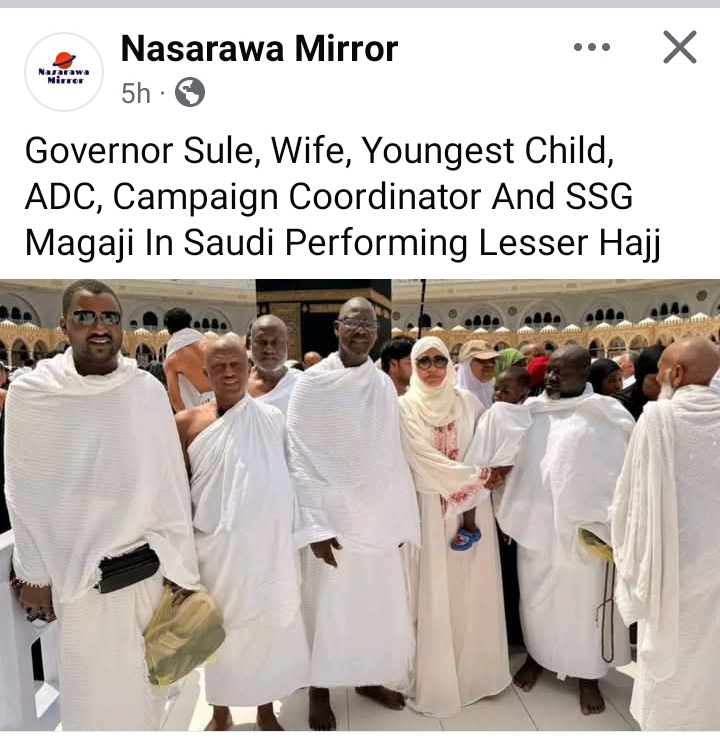
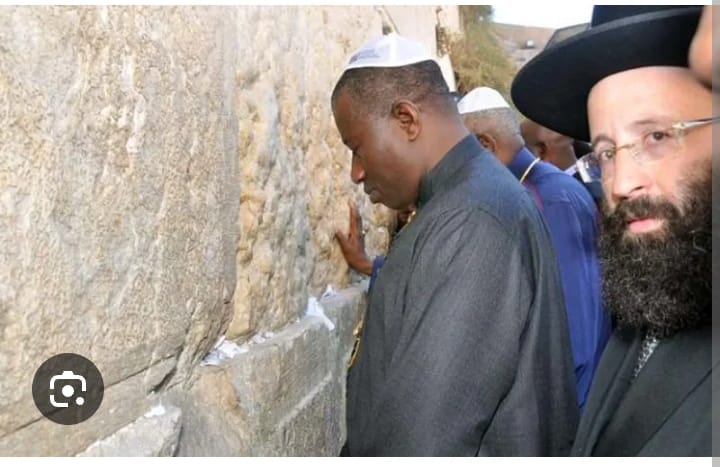
Just imagine as I am writing this, some Nigerian Christian and Muslim governors and politicians, like Engineer A.A. Sule of Nasarawa State, have jet off to Saudi Arabia and Israel for pilgrimage, their poor followers are asking them to pray for blessings 🙏. Meanwhile, I'm questioning the fairness 🤔: shouldn't the taxpayers' money used for this trip be shared equally among citizens? That way, everyone, even secular citizens can plan their own pilgrimage, which could be locally in our respective villages, and that would bring more development to our localities. That's what I call equity and justice ⚖️. If they were using personal funds, no one would bat an eyelid or give a damn.
So while I genuinely appreciate your concern and brotherly advice, I have also come to believe that a person is not truly fit to live until he has discovered something he is willing to stand for, even at great personal cost. If countless people throughout history have been willing to die for their religious beliefs, then it should not be strange that I am prepared to stand firmly for my convictions about justice, truth, and the future of our country.
Please understand that my intention is not to offend, divide, or provoke unnecessarily. My intention is to encourage honest reflection and responsible conversation about issues that affect us all.
And regardless of our differences in perspective, I will always value the sincerity of your friendship and the spirit of brotherhood with which you spoke to me.
I remain your brother with conscience,
Uchenna Umez
No comments yet. Be the first!
Leave a Comment