EMERGENCY OPEN LETTER TO THE PRESIDENT OF THE FEDERAL REPUBLIC OF NIGERIA
Published on December 28, 2025
"How does a country establish a university, educate its citizens, graduate them in law, and then reject them at the very gate of professional fulfillment? This contradiction cuts deep into the soul of justice and undermines confidence in the rule of law itself."
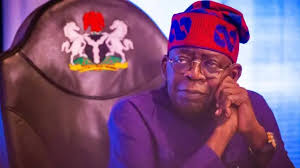
Your Excellency,
President and Commander-in-Chief of the Armed Forces
of the Federal Republic of Nigeria,
Asiwaju Bola Ahmed Tinubu, GCFR.
I write to you today not as an agitator, not as a lawbreaker, and certainly not as an enemy of the Nigerian state—but as a law-abiding, patriotic Nigerian whose faith in justice, alongside that of over 4,000 Law graduates of the National Open University of Nigeria (NOUN), is being stretched to its very limits.
Mr. President, we are graduates of the National Open University of Nigeria—a federal university established by law, duly accredited by the National Universities Commission (NUC), funded by Nigerian taxpayers, and owned by the Federal Republic of Nigeria itself.
Yet, despite meeting all academic requirements, despite years of perseverance, sacrifice, and discipline, we have been systematically denied admission into the Nigerian Law School—not because we failed, but simply because of where we studied.
This denial has no clear statutory basis.
It has no constitutional justification.
And it has no moral defense.
Your Excellency, how does a country establish a university, educate its citizens, graduate them in law, and then reject them at the very gate of professional fulfillment? This contradiction cuts deep into the soul of justice and undermines confidence in the rule of law itself.
We studied law to defend the rule of law.
We studied law to serve society.
We studied law to strengthen Nigeria’s justice system.
Yet today, the very system we trained to protect has turned its back on us.
Mr. President, this issue is no longer theoretical—it has been tested and proven in practice.
The current batch of NOUN law graduates who were eventually admitted into the Nigerian Law School—after being subjected to the Special Remedial Programme (SRP), a process many of us can only describe as academic torture—excelled.
They passed.
They were called to the Bar this year.
They came out with flying colours.
Their performance stands as living evidence that the long-standing discrimination against NOUN graduates was unnecessary, unjustified, and unfounded from the very beginning.
Mr. President, if after such severe hurdles NOUN graduates still proved competent, then I respectfully ask:
What exactly were we being protected from?
And for how long must injustice hide behind procedure?
Your Excellency, the current batch-by-batch admission system now being operated by the Council of Legal Education threatens to prolong this injustice even further. With over 4,000 qualified NOUN law graduates awaiting admission, the existing structure may take another ten years before all are cleared—if we live that long.
Tragically, Mr. President, some of us are already dying.
Others are ageing, with time no longer on their side.
Careers are collapsing.
Families are breaking apart.
Hope is steadily evaporating.
This is no longer a mere administrative issue.
It is a human emergency.
Mr. President, Section 42 of the 1999 Constitution (as amended) expressly prohibits discrimination. The Legal Education Act does not exclude NOUN graduates. The Council of Legal Education Act does not criminalize open and distance learning. Across the world, progressive legal systems recognize distance learning as valid and effective.
Already, the Learned Silk and former Nigerian Vice President, Prof. Yemi Osinbajo, GCON, Prof. Maxwell Gidado, OON, SAN, and the eminent jurist, His Lordship, Sir Hon. Justice Biobele Abraham Georgewill, JCA, DSSRS, KSC, FCIArb (UK), Presiding Justice of The Court of Appeal, (Ibadan Division), among many others, have consistently advocated for a progressive, technology-driven legal education system. Their position emphasizes critical thinking over rote learning, a decisive shift beyond the traditional law school model, and the integration of artificial intelligence, online learning platforms, and practical problem-solving within university law faculties.
Crucially, they argue that the Nigerian Law School should primarily function as a regulator, curriculum model, and professional guide, setting benchmarks and standards for legal education, rather than remaining the sole gatekeeper through an intensive, short-term, centralized training model. Under this framework, regulation would ensure quality and uniformity, while universities deliver robust, practice-oriented legal training that better serves society’s evolving needs.
In this regard, the National Open University of Nigeria (NOUN) has already answered this clarion call. Having pioneered and institutionalized this forward-looking approach, NOUN rightly deserves recognition and reward for being the pathfinder and trailblazer in modern legal education in Nigeria.
Many NOUN law graduates, drawn from diverse professional backgrounds—including security services, political class, healthcare, academia, banking, and the civil service, among others—have already been serving the nation in various capacities before, during, and after their law studies at NOUN. Granting them access to the Nigerian Bar would not only formalize their legal training but would also enhance their efficiency, effectiveness, and value in service to the motherland. Indeed, the former President of the Federal Republic of Nigeria, Chief Olusegun Obasanjo, GCFR, stands as a notable example of a national leader who, though not from the law faculty, exemplifies how professional experience combined with continuous education strengthens national service—an ideal mirrored by many NOUN graduates.
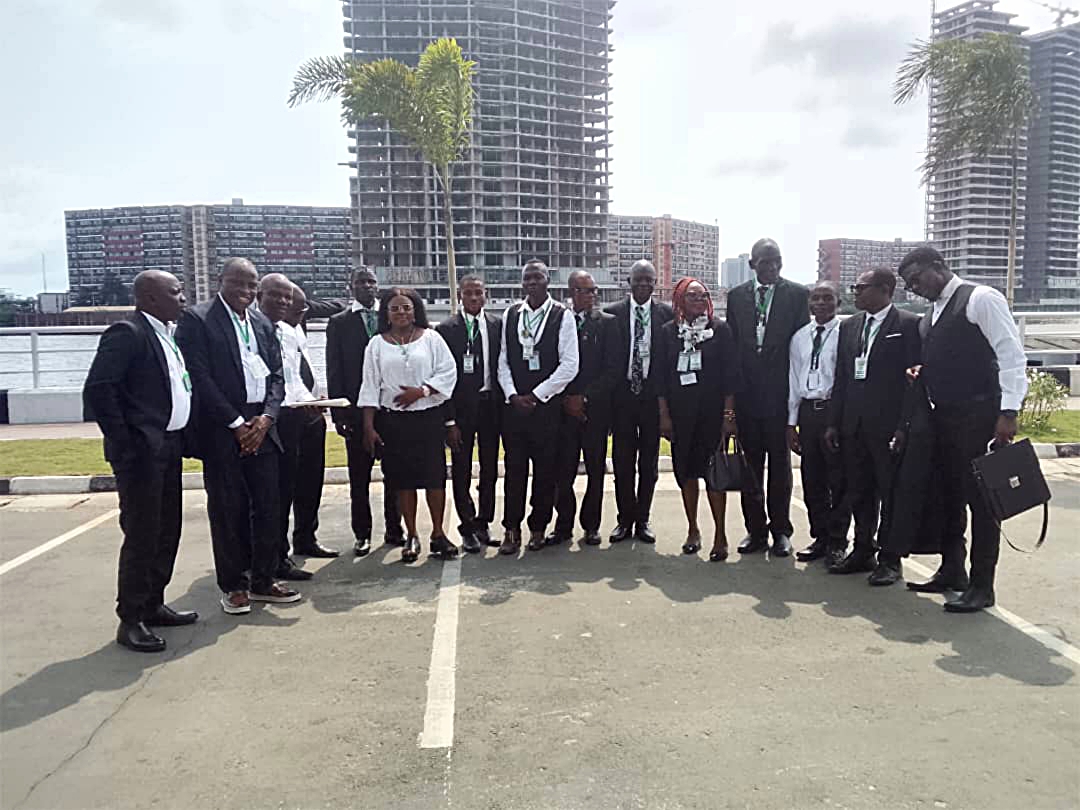
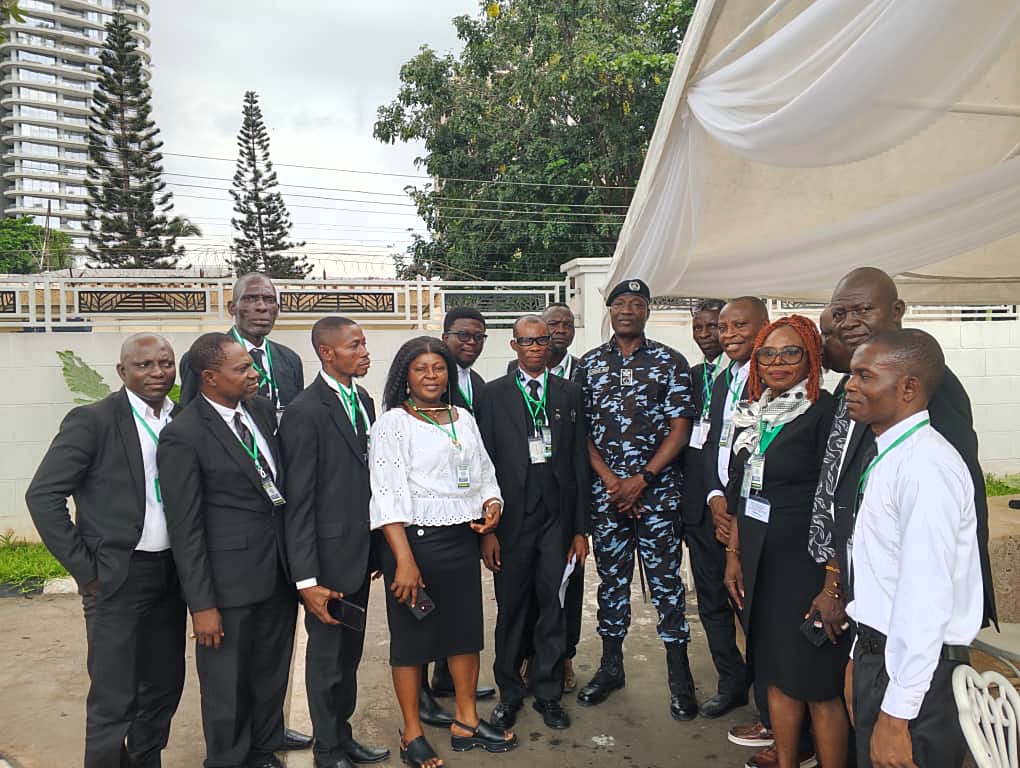
Just two days ago, few delegates representing the over 4,000 NOUN law graduates respectfully sought a father-and-children audience with Your Excellency during this holiday period at your Lagos residence on 26 December 2025, but were unfortunately unable to secure it. However, while there at your compound, the amiable Lagos State Commissioner of Police, CP Olohundare Moshood Jimoh, took note of our decorum and civility, graciously approached our table, and shared warm pleasantries with us with sincere words of encouragement.
So I say—respectfully but firmly:
NOUN law graduates ought not to be treated ab initio as second-class citizens in their own country.
We are not asking for shortcuts.
We are not asking for favours.
We are not asking for lowered standards.
We are asking for equal opportunity.
Subject us to the same Law School curriculum.
Subject us to the same examinations.
Let merit decide—not prejudice.
Your Excellency, history remembers leaders not by the offices they occupied, but by the injustices they confronted and corrected. True leadership is also measured by the problems detected and resolved before they degenerate into national emergencies.
You spoke of Renewed Hope.
Hope cannot be renewed where qualified citizens are locked out of their future.
Hope cannot be renewed where silence replaces justice.
With one decisive intervention—through an executive directive to the Council of Legal Education—you can end years of stagnation and suffering. You can restore public confidence in our institutions. You can prove that Nigeria does not punish diligence, sacrifice, or lawful education.
Behind every NOUN law graduate denied admission are parents who believed, children who waited, careers frozen, dreams deferred, and lives placed on hold.
We are not lazy.
We are not inferior.
We are Nigerians.
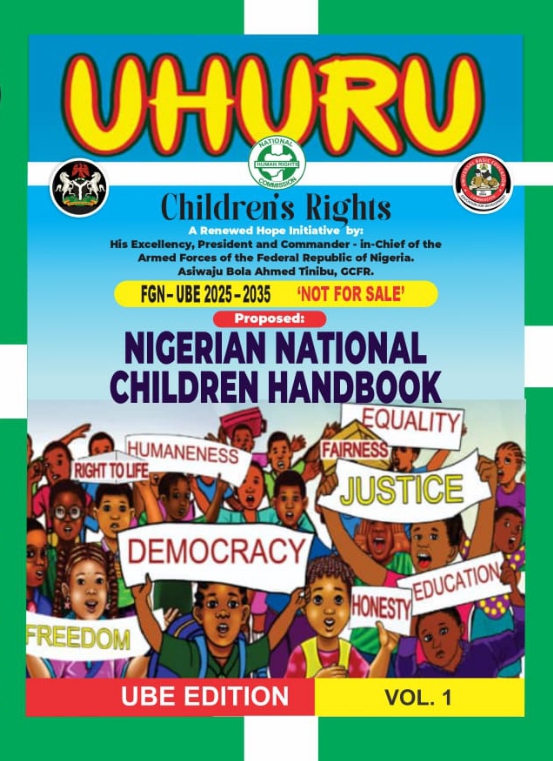
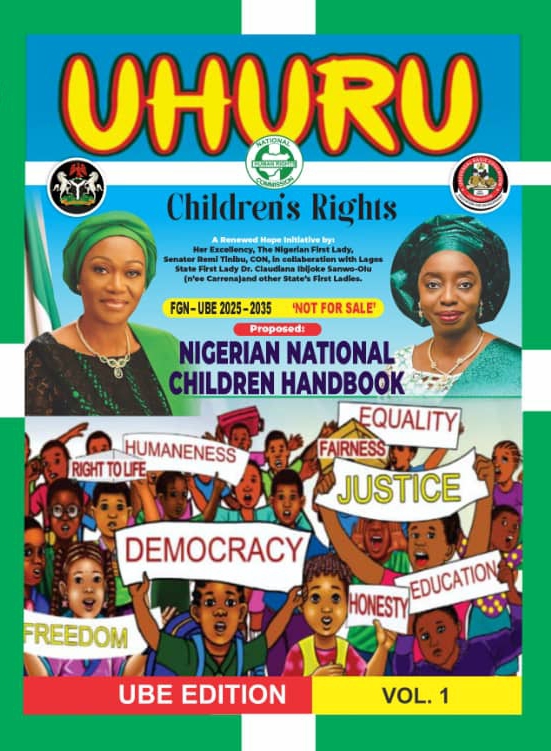
To demonstrate this, I humbly note that in 2013, while still a second-year law student at NOUN, I authored a textbook titled UHURU CHILDREN’S RIGHTS. The uniqueness of this work earned the Foreword by the then Vice-Chancellor of NOUN, Prof. Vincent Tenebe, and the Afterword by your current Honourable Minister of Aviation and Aerospace Development, Mr. Festus Keyamo, SAN. A textbook that argues that pursuant to the UBE Act, 2004, LFN, governments are duty-bound to protect, educate, and nurture children as fundamental rights. Therefore, any state that still permits street begging or neglects the welfare of children is inadvertently contributing to the rise of terrorism, banditry, social vices, insecurity, and instability within its borders.
The book was reviewed and approved by the Nigerian Educational Research and Development Council (NERDC) as a supplementary civic education reader for basic schools nationwide. Adapted and graphically illustrated from the United Nations Convention on the Rights of the Child (1989), the Child Rights Act (2003), and the Universal Basic Education Act (2004), it stands as proof of the intellectual capacity and patriotism of NOUN products.
I am even willing to offer this intellectual property free of charge to the Federal Government for a specified number of years—under flexible conditions—for use in all basic schools and public spaces nationwide, as part of a strategy to educate Nigerian children on their rights and duties and protect them from recruitment by terrorists and organized criminal networks.
I further propose it as a Nigerian National Children’s Handbook, an initiative that could be championed by the First Lady of the Federal Republic of Nigeria, in collaboration with State First Ladies, Commissioners for Women Affairs and Child Welfare, and relevant federal institutions.
This is who many products of the National Open University of Nigeria are:
patriotic Nigerians and national solution providers.
And today, Mr. President, I beseech you—as a father, as a democrat, and as a statesman whose name is already etched into Nigeria’s history—please intervene.
Let it be said that under your leadership, Nigeria chose justice over bureaucracy, fairness over exclusion, and law over arbitrariness.
Grant us access to the Nigerian Law School.
Let us prove ourselves.
Let us serve Nigeria.
Your Excellency, history is watching.
Posterity is listening.
And thousands of Nigerians are waiting.
Please intervene.
God bless you, Sir.
God bless the Federal Republic of Nigeria.
Comrade Uchenna Umez, ACarb (Two-time Winner of the NOUN-Vice Chancellor Annual Essay Competition, for the Law Faculty)
LL.M (Constitutional & Human Rights Law – A/R)
M.Sc. Criminology & Security Studies – A/R
Author, UHURU CHILDREN’S RIGHTS
National Coordinator, Human Rights Research and Advocacy Forum
For: The remaining over 4,000 NOUN Law graduates awaiting admission into the Nigerian Law School.
Comments
December 31, 2025
Comrade Uchenna Umez, thank you for the epistle letter you have written to our dear beloved President and Commander-in-Chief of the Armed Forces of the Federal Republic of Nigeria, Asiwaju Bola Ahmed Tinubu, GCFR on behalf of over 4000 NOUN Law graduates who are unjustly been denied of admission into the Nigeria Law school.
Our ever listening President, Baba Asiwaju by the special grace of God Almighty, will certainly intervene over our plight, and we, the innocent children will forever remain eternally very grateful to him.
My amiable comrade Uchenna, remain divinely blessed.
December 30, 2025
Well scripted and compelling.
I pray, the relevant authorities act timely, to ameliorate our hardship and avoidable hopelessness, please.
December 30, 2025
Well scripted and compelling.
I pray, the relevant authorities act timely, to ameliorate our hardship and avoidable hopelessness, please.
December 30, 2025
Well scripted and compelling.
I pray, the relevant authorities act timely, to ameliorate our hardship and avoidable hopeless, please.
Leave a Comment